This is my last post in this three part series. Granted, I know there are other cultures that are involved in making up Puerto Ricans such as Corsicans, other Caribbean islands, countries in South America, etc., but I wanted to focus on the three main groups known to make up the Puerto Rican culture – Spanish, Taíno, and African. Feel free to read the first two posts about finding your Spanish and Taíno ancestors.
In this post, I want to focus on how to going about finding your African roots.
Where To Get Started?
Similarly to the other posts, you might have grown up knowing you had ancestors who were of African origin at one point or another. You have taken a DNA test and noticed a noticeable African percentage, or you discovered someone in your tree labeled as esclavo (slave) or moreno (brown) in genealogical documents. Pardo is another possible term that can identicate mixed roots; however, I have found that with pardo, this term can be used for various generations without any indication of a foreign origin. With a term like moreno, it is very possible for it to be used across various generations as well, but I feel like typically within a few generations you can find a mention of either an enslaved ancestor or an ancestor from another island that had a higher African population and thus were physically labeled by their race on paper.
DNA Evidence
As explored before, DNA is a very evident way of knowing that you have African ancestry. Any of the major companies (23andme, AncestryDNA, MyHeritage, FamilyTreeDNA) will be able to pick up recent African DNA. This percentage will depend on your family’s history on the island. Many Puerto Ricans have African DNA; however, the numbers can vary greatly. For example, my dad’s side which is more from the mountains has lesser African DNA compared to my mother’s side that is more from the northern and southern coasts of the island.
A look below shows my African DNA inherited from my ancestors. It is important to note that I have ancestors from Martinique and Guadeloupe that introduced African DNA into my genetics around the mid-1800s. It is not a common group in Puerto Rico and so it definitely sways my results a bit, but not majorly as you can see I am only 17.2% Sub-Saharan African, my maternal grandfather was much more African, about double my percentage.
Source: “Ancestry Composition”, 23andme (https://www.23andme.com/ : accessed 9 August 2025). Username and password of Luis Rivera privately held by the author.
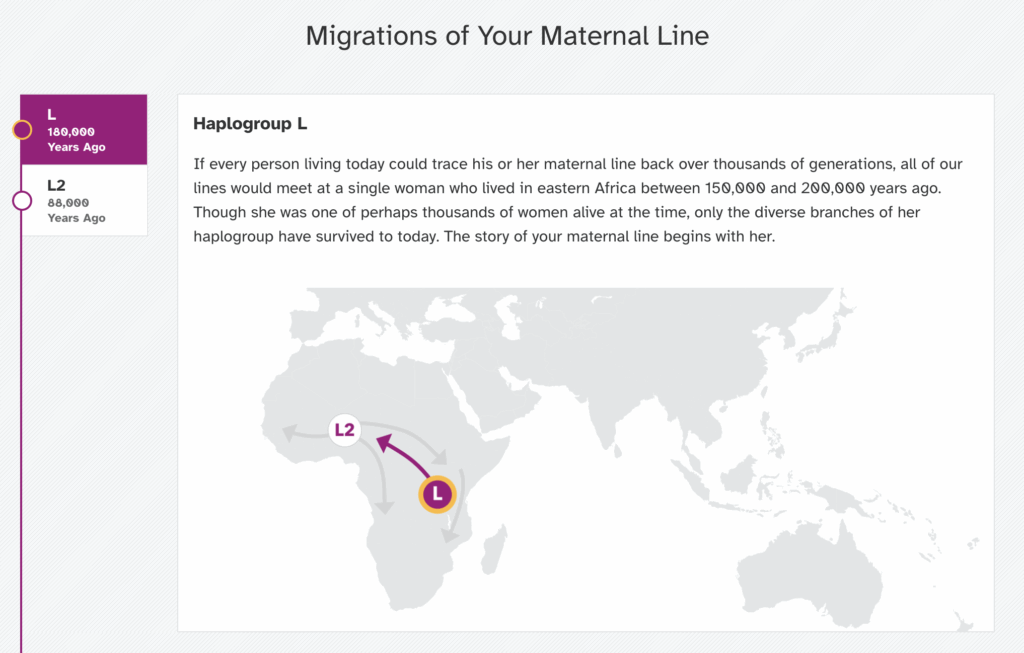
Similarly, a haplogroup (whether paternal or maternal) can be an indication to an African ancestor in your family. For example, even though my father’s side is a bit more European, my paternal grandmother carried an African maternal haplogroup that dates back to Yauco in the 18th century.
Source: “Maternal Haplogroup”, 23andme (https://www.23andme.com/ : accessed 12 August 2025). Username and password of José Rivera privately held by Luis Rivera.
Feel free to read some other posts I have written about tracing your African DNA and ancestry. Again, many of these posts are specific to my family but may serve as some inspiration as to how to get started on your journey to finding your African ancestors.
If you have not taken a DNA test, then tracing your ancestry through traditional paper trail can help you to locate your African ancestors. Again, this will depend on your family’s history and what can be found for them. Some parish records can not be found online for certain towns and so you might be blocked from finding your African ancestors. However, there are other resources to consider.
Some Resources
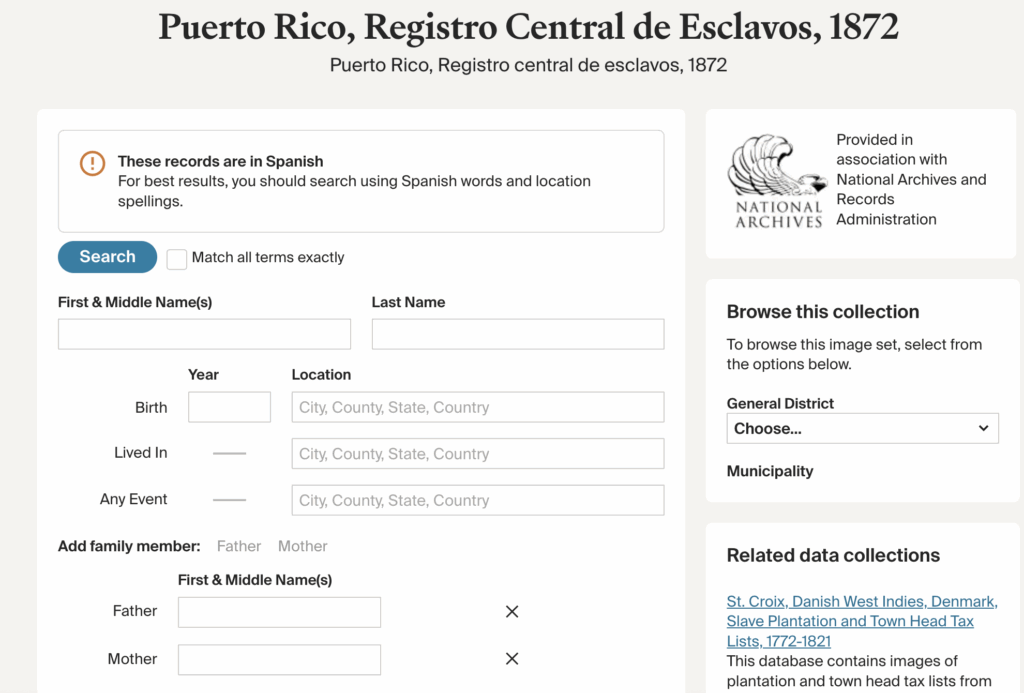
Registro Central de Esclavos, 1872
If your ancestors were enslaved before emancipation, you may be able to find them in the Central Registry of Slaves from 1872. Sometimes you can find them by their first name if they didn’t share the last name of their enslaver, other times you can search with just their surname to see who in that town owned slaves and if they shared a connection to your ancestors. Similarly, it is important to remember that some towns are not available in this database.
“Puerto Rico, Registro Central de Esclavos, 1872,” Ancestry (https://www.ancestry.com/: accessed 12 August 2025).
Notarial Records
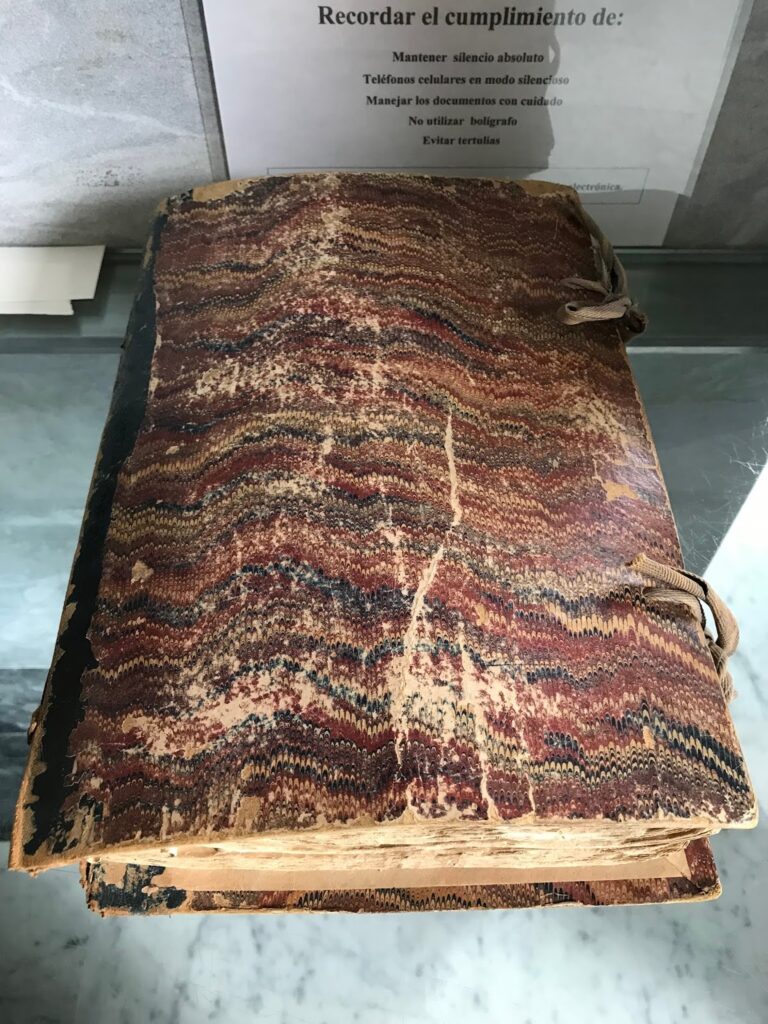
This is another set of records that can be explored when searching for enslaved ancestors; however, you typically need to know the name of the enslaver and if they left behind a last will and testament. Sometimes you can learn more information about your African ancestor through the records of those that enslaved them. Not all slaves were born in Africa and so it is important to keep in mind that you might have to go back a few generations to find when your African ancestor arrived in Puerto Rico. These records are both hard to obtain and sometimes hard to use. Mainly because you have to research them in person and you need to know the name of the notary the enslaver used to order to locate their last will and testament. Similarly when some people left wills, they did so in a manner that they would not have ended up in the Archivo General de Puerto Rico (AGPR). Therefore, the search may be complicated by these added hurdles.
Notary Records, AGPR [Personal Photo]
Arrivals from other islands
Not every ancestor arrived directly from Africa, sometimes they arrived through other islands as they were enslaved there first and then brought over with their masters as they fled their original island or as they moved looking for more opportunities. You will also see free blacks (morenos libres) who sometimes came to Puerto Rico in the situation just mentioned and then proceeded to free themselves or were freed upon the death of their owner. Others fled or came to Puerto Rico to look for new opportunities on their own. For example, my 4th great-grandparents Gustave Jean Charles and Julienne Malvina Lautin came to Puerto Rico after they were freed from slavery on their respective islands. It was Julienne Lautin’s mother Eglantine who was a native of Africa and brought over to Martinique sometime in the mid-1800s. I am still not sure when Gustave’s parents were enslaved and how far back I would need to go back to find their origins in Africa given the lack of documents of this time period. I am hopeful though to one day solve this mystery!
These are a few situations to keep in mind as there were many other islands in the Caribbean which also maintained slavery until the nineteenth century.
Conclusions
Finding your African ancestors can be an exciting and yet painful experience. Many times, our ancestors that have origins in Africa did not come to Puerto Rico on their own volition. They were forced to work on the island and forced to abandon their home, their language, and their people in this new land. Sometimes, it can take years to locate these ancestors as often times their names can be erased and their identities muddled by changing surnames and quick movements from town to town either looking for work and at the whim of their owners. Therefore, it requires steady patience, but the payout is very rewarding!
It is sad when I see people only interested in finding their Spanish ancestors as researching our Indigenous and African ancestors should also be a part of our genealogical journey. Though I am only 17% African, without this percentage I certainly would not be here today. If it was not for the courage and fortitude of my enslaved ancestors, I definitely would not be exploring my ancestry today. We must definitely honor them!
1 thought on “A Puerto Rican Look At: Researching Your African Ancestors (Part III) ”
Antwan Duckett
I located a baptism record that shows my 7th great-grandmother being negra libre. She and her husband a few years later would move to Arecibo.


I located a baptism record that shows my 7th great-grandmother being negra libre. She and her husband a few years later would move to Arecibo.