Recently, at the end of September, 23andMe released a fairly big update to their genetic DNA results. The biggest changes seem to have come to the European section of the results, which have not been majorly updated for about ten years. So let’s take a look, focusing mostly on my European results!
New European Percentages
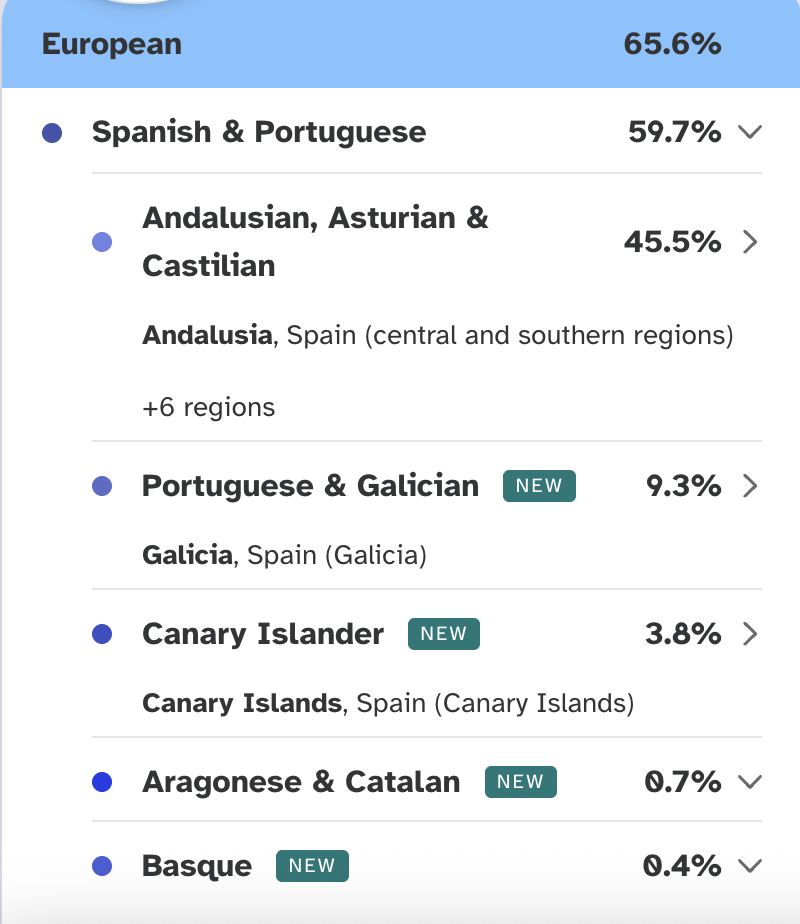
Below are my new European results, which have mainly changed when it comes to the Spanish & Portuguese breakdown which previously were not as broken down. Now my results include new areas such as “Andalusian, Asturian & Castilian” “Portuguese & Galicia”, “Canary Islander”, “Aragonese & Catalan”, and “Basque”.
Source: “Ancestry Composition”, 23andme (https://www.23andme.com/ : accessed 5 October 2025). Username and password held by author, Luis Rivera.
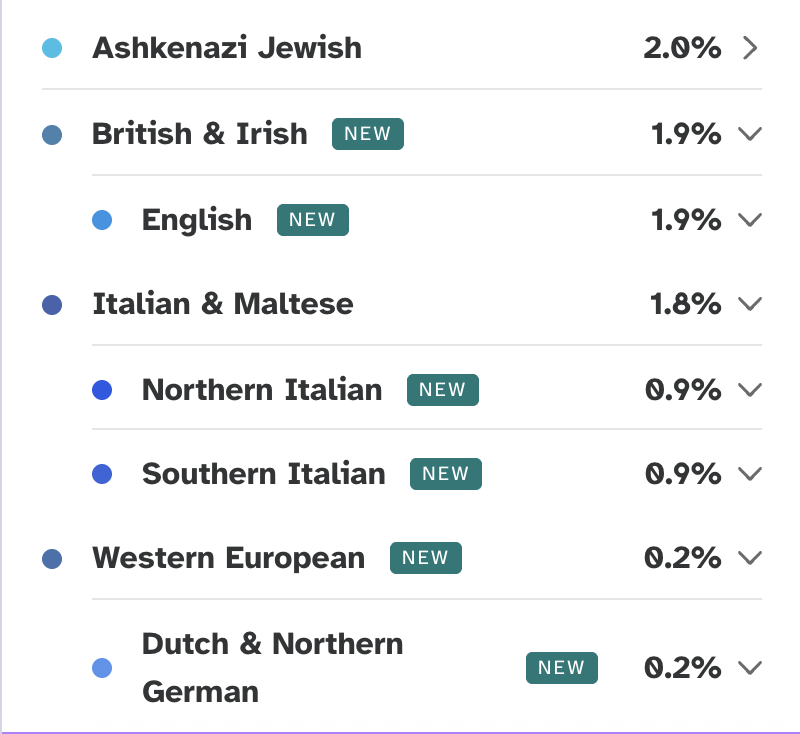
My results also include other areas such as “British & Irish” (subsection English), “Italian & Maltese” (subsection Northern/Southern Italian), and a general area of “Western European” with a subsection of “Dutch & Northern German”.
Source: “Ancestry Composition”, 23andme (https://www.23andme.com/ : accessed 5 October 2025). Username and password held by author, Luis Rivera.
How do these results compare to my old DNA results? Similarly, how do these results match up to my family history and what is known about Puerto Rican history?
Version History
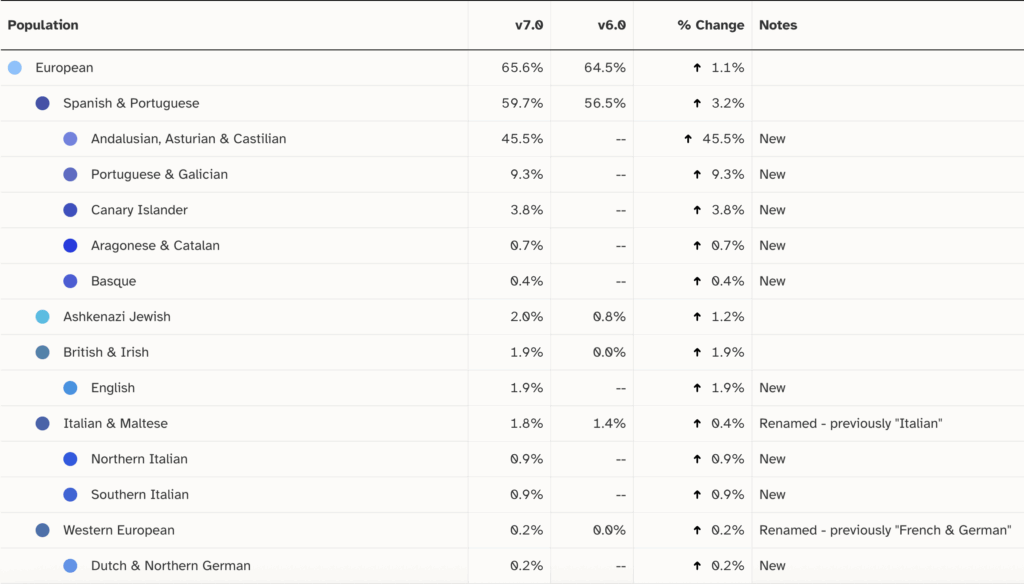
Source: “Version History”, 23andme (https://www.23andme.com/ : accessed 5 October 2025). Username and password held by author, Luis Rivera.
With the update comes a version history which allows you to see how your results have changed over time from the previous v6 to the current v7.
You can see that my results are mainly Andalusian, Asturian, and Castilian while the next percentage is Portuguese and Galician. Similarly, you can see that previously identified French results are now Western European – Dutch & Northern German, while my Italian results went up 0.4%. Lastly, my Ashkenazi Jewish went up 0.8% for a total of 2%.
Family/Puerto Rican History
I will say that I find some of the results questionable… not entirely off, but I do wonder how they fit with Puerto Rican history and my own known family history. Let’s look at each section and check in with how they match up with what I know.
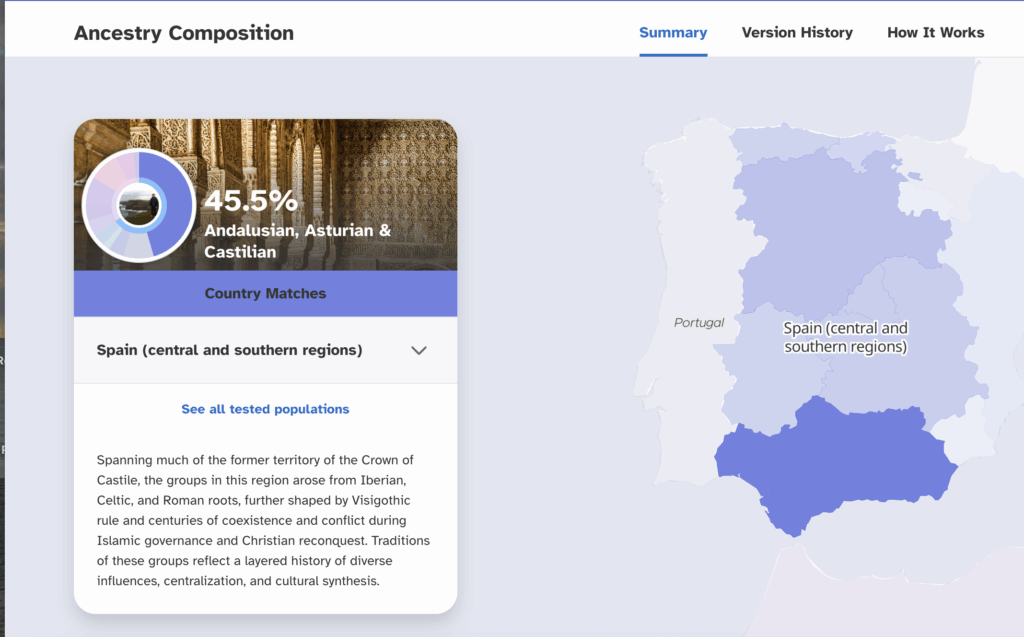
Andalusian, Asturian & Castilian
Source: “Ancestry Composition”, 23andme (https://www.23andme.com/ : accessed 5 October 2025). Username and password held by author, Luis Rivera.
This percentage does make sense to me, especially the Andalusian part. In my family and in Puerto Rico’s history, it is known that many southern Spaniards went to Puerto Rico. In my own family I have found connections to southern Spain via the towns of San Juan del Puerto and Villalba del Alcor. I imagine there are other southern branches on my family tree that I have not been able to find just yet.
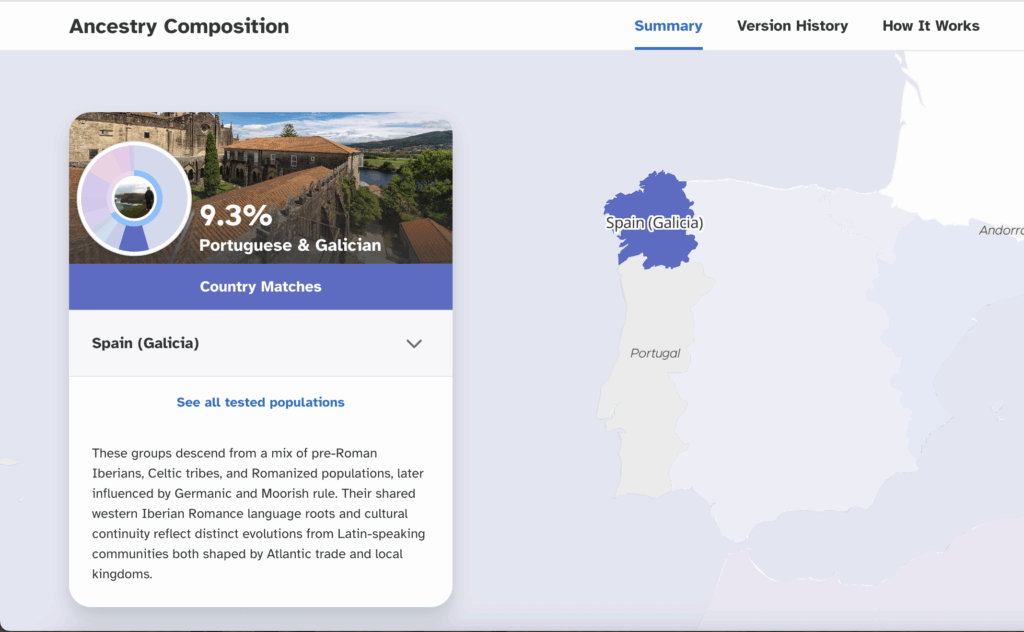
Portuguese & Galician
Source: “Ancestry Composition”, 23andme (https://www.23andme.com/ : accessed 5 October 2025). Username and password held by author, Luis Rivera.
I was actually surprised by this genetic group seeing as how I expected Canary Islander to be higher since Puerto Ricans are historically known to have more immigrants from this area of Spain compared to the north. Currently, in my family tree I don’t have any northern branches from Portugal or Galicia; however, it is believed that some Portuguese DNA made its way to the Canary Islands before heading to the New World. Therefore, it is possible that I have some of this Portuguese DNA from the Canary Islands.
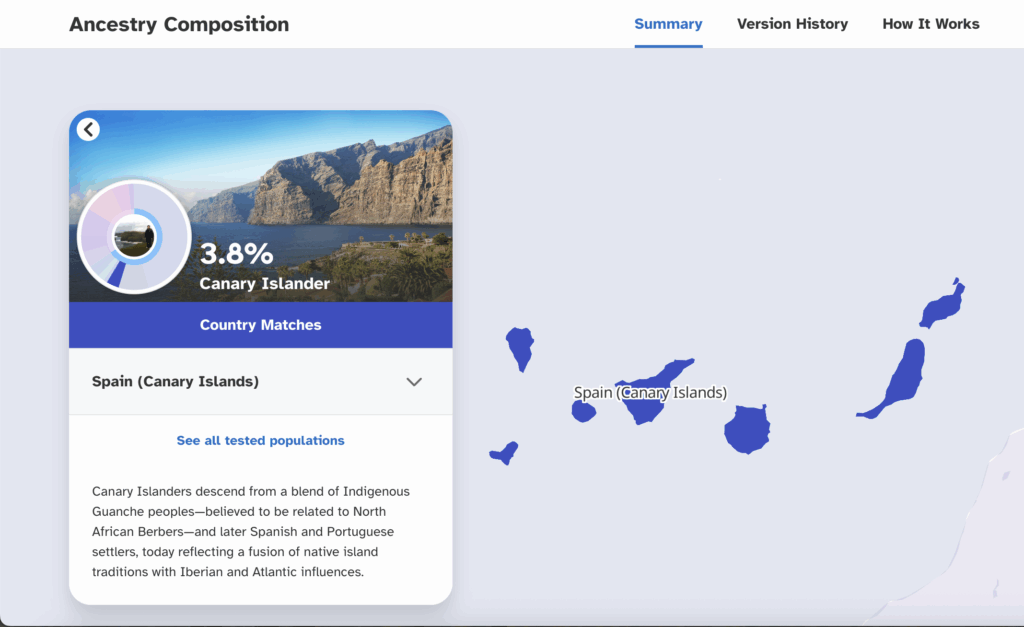
Source: “Ancestry Composition”, 23andme (https://www.23andme.com/ : accessed 5 October 2025). Username and password held by author, Luis Rivera.
I expected Canary Islander to be much higher in my DNA but I only received 3.8% from this region in Spain. So far, I have only been able to find one Canarian ancestor, my 8th great-grandmother, but it is definitely possible that there are others in my tree I have yet to discover. For example, a lot of genealogists say the surname Marrero is from the Canary Islands and I have a few of my paternal branches tied to this surname, so who knows how many times over I am Canarian through this surname.
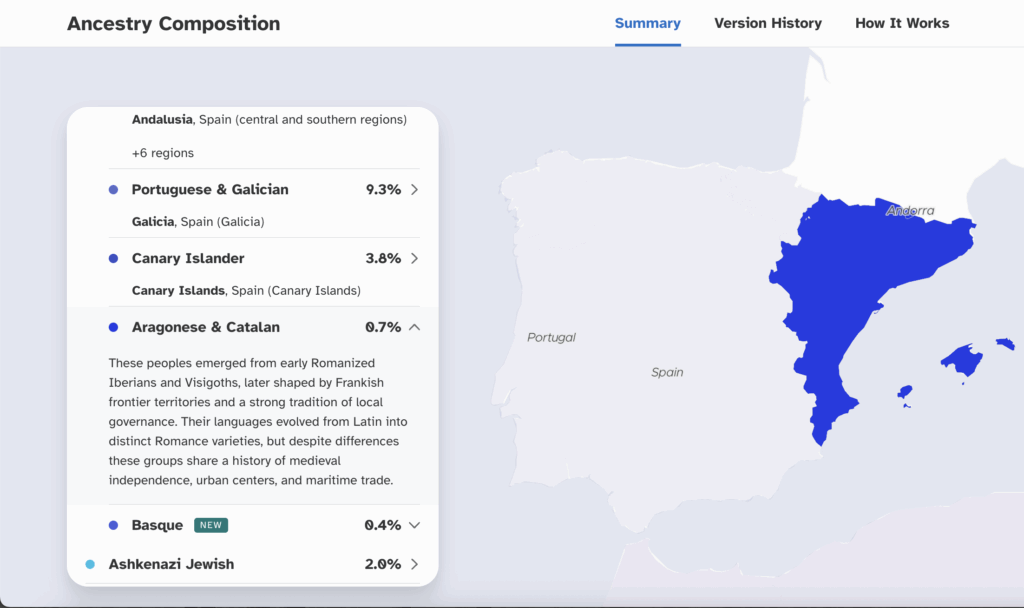
Aragonese & Catalan
Source: “Ancestry Composition”, 23andme (https://www.23andme.com/ : accessed 5 October 2025). Username and password held by author, Luis Rivera.
This percentage makes sense with my connection to Mallorca via my 3rd great-grandfather; however, the percentage is fairly small. At a 3rd great-grandfather level, I would inherit at most 3.125% DNA from him. A look at my cousins’ DNA results related much closer to this Mallorcan ancestor would show how much higher their percentages are in comparison to mine.
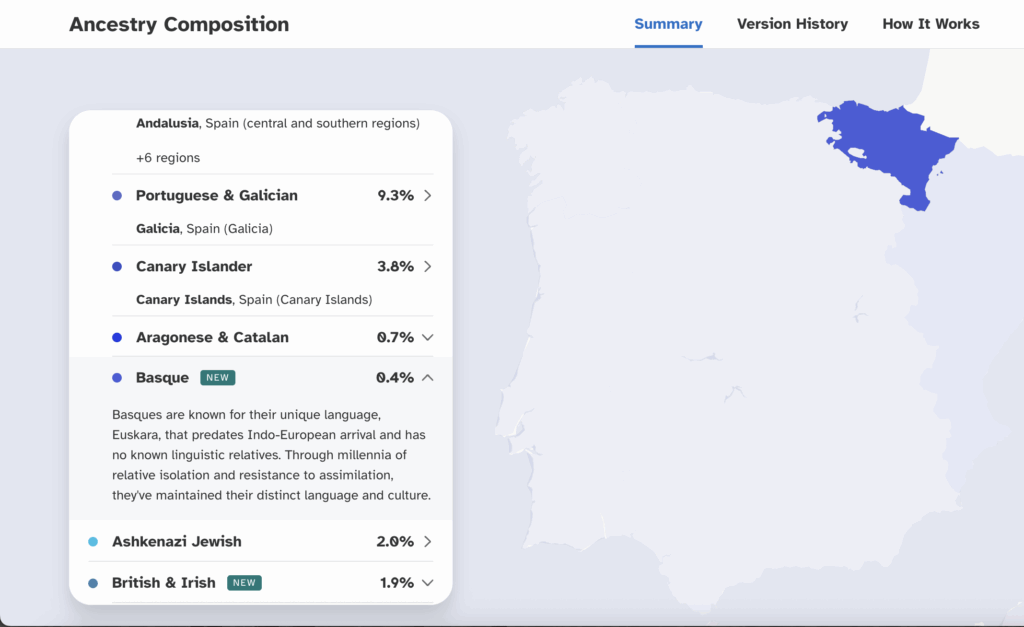
Basque
Source: “Ancestry Composition”, 23andme (https://www.23andme.com/ : accessed 5 October 2025). Username and password held by author, Luis Rivera.
A look at my younger brother’s results show some variation in between what he and I inherited – enough to make me do a double take. Below you can see that our “Andalusian, Asturian & Castilian” and “Portuguese & Galician” are basically flipped.
For being siblings this was surprising because I don’t see how our percentages could be so different in these two regions since we share the same parents as full siblings.
Conclusions
I believe that there is definitely some ironing to do with these new results. The results only just came out, barely a week, and I wonder what others will say about their DNA results in comparison to their family histories. So far I have seen a mix of emotions, some people are much happier since the new results match their family’s history better, while others are perplexed by their new percentages. I didn’t even touch the Italian and Dutch/German percentages here because I don’t know how they fit into my family’s history. Yet at 0.2% for Dutch/German, I am not too worried as this percentage could change in a future update.
I am more interested in the difference between my brother and I and then seeing how my percentages fit into my overall history. Stay tuned as more time passes between these results and other updates likely to come in the future!
2 thoughts on “A Puerto Rican Look at: Updated 23andme Results (2025)”
Yvette Nieves
Very interesting regarding the difference in the sibling results. I too have Matter ancestors!
David
Very nice update. I came upon your website via a YouTube video. I have been interested in trying Ancestry and 23andMe but I have concerns about privacy and breaches. You seem to have embrace both with mixed results as you report above. You have done a very good job with this website, thank you. Recently I was trying to find out if my paternal grandparents were from Spain. That was because of my interest in applying for Spanish citizenship based on a grandparents law that is ending in October 2025. I was trying to use the links here and your suggestions but unfortunately my grandparents lived in the Aguadilla region and the church records from there are not published. Thanks again.


Very interesting regarding the difference in the sibling results. I too have Matter ancestors!
Very nice update. I came upon your website via a YouTube video. I have been interested in trying Ancestry and 23andMe but I have concerns about privacy and breaches. You seem to have embrace both with mixed results as you report above. You have done a very good job with this website, thank you. Recently I was trying to find out if my paternal grandparents were from Spain. That was because of my interest in applying for Spanish citizenship based on a grandparents law that is ending in October 2025. I was trying to use the links here and your suggestions but unfortunately my grandparents lived in the Aguadilla region and the church records from there are not published. Thanks again.