
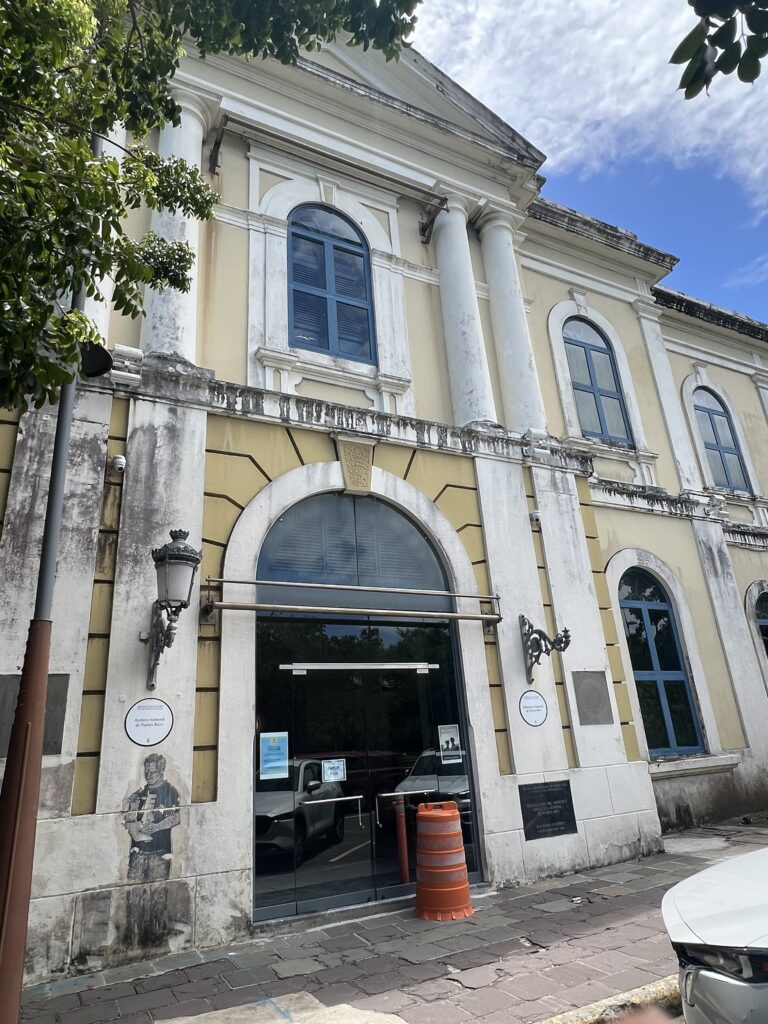
Two weeks ago I headed to Puerto Rico for a quick long weekend visit for my grandmother’s birthday. So I decided to quickly stop by the Archivo General de Puerto Rico (AGPR). I hadn’t been here since 2019 (pre-pandemic) when I was on spring break and decided to search for my 5th great-grandmother’s last will and testament.
This time, I was also looking for a last will and testament; however, it was for my 3rd great-uncle, Gabriel Magraner Morell. I have talked about him before in relation to the act of coartación and slavery. It turns out that though he died in San Juan, he left behind a testament in Lares in 1871. I was actually able to find two versions of them while on my recent visit and I will have to sit down to read them and abstract information from them soon!
Before Arriving to the AGPR
It is always important to do some research before heading to an archive, especially since covid may have changed some of the rules for visiting. Luckily for me, the rules for the AGPR had basically gone back to normal. This meant that I could visit the archive and have them pull the records I needed before getting there. The only difference I noticed was that now when you email the archive, you get a time slot assigned to you. Since I wanted to visit on a specific day (Friday), I mentioned that to them in my email and was assigned a slot at 9AM that Friday morning. Definitely give yourself time for them to respond and if you can make a phone call to them, definitely do it! This helped to confirm that the right person read my email.
Reaching out to an archive is also important because though the AGPR has never been completely full (at least each time that I visit), you should always check in with an archive on their process of visits and reservations because it is possible that you may not get a slot if the archive is very busy or closed for specific holidays. I have seen this happen in Spain where the entire research room has been booked, sometimes weeks or months in advance!
Also, make sure to check out the Recursos de Búsquedas on their website to find out what resources are available for the time period and towns of interest you want to research.
My Visit to the AGPR
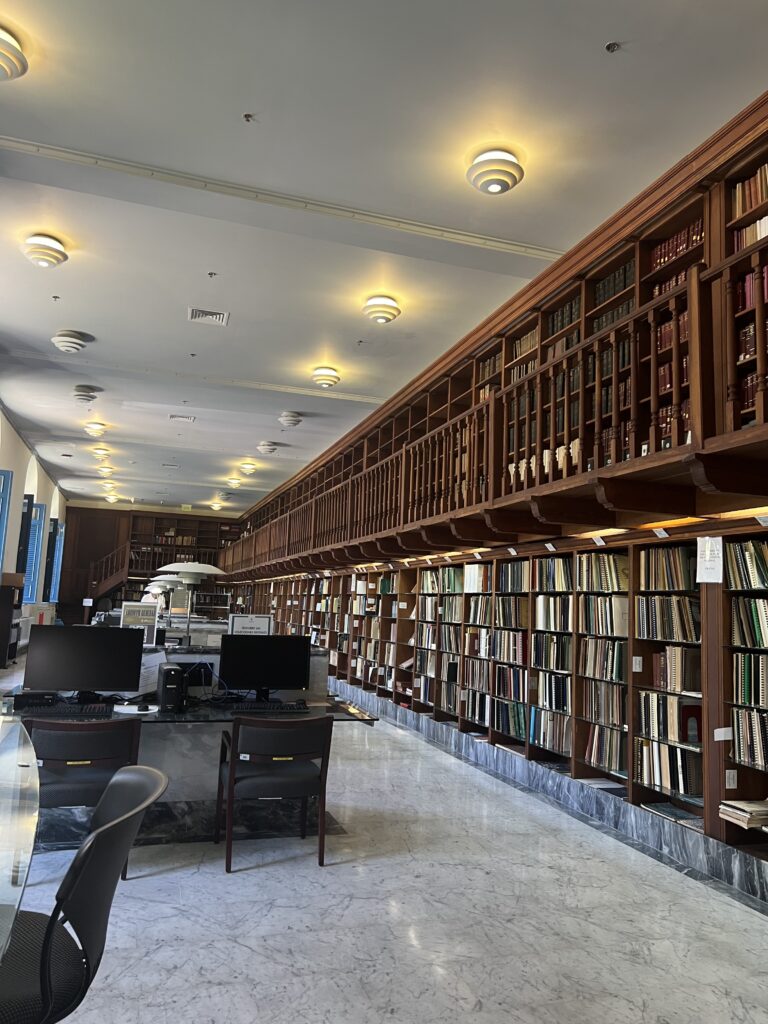
I was very lucky during this visit because Saturday and Sunday Hurricane Erin was traveling past the island at a Category 5. Though Puerto Rico was fairly lucky this time around, we were hit with rain, flooding, lightning/thunder – this meant that the archive could have easily been closed due to the impending storm. The weather Friday morning was sunny with clear skies so I had no issues getting to the archive and staying there for multiple hours to do my research.
This was my first time taking an Uber on the island to do research and it was fairly easy and seamless to do! While there I had requested two boxes where the last wills and testaments had been identified in the online catalog.
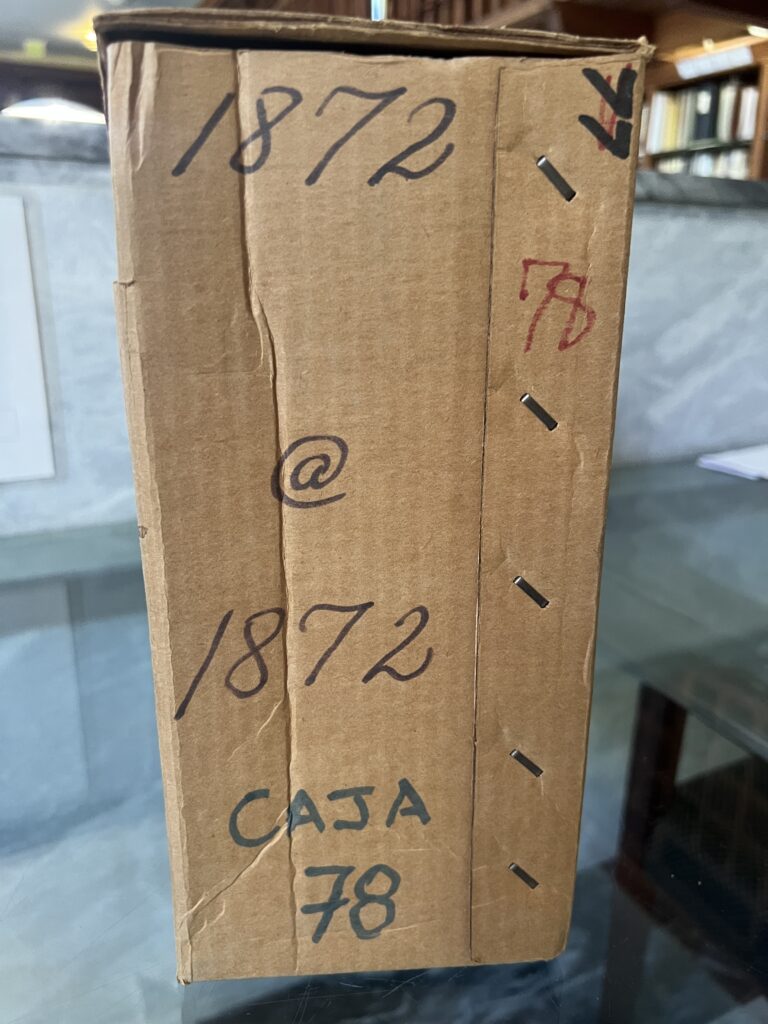
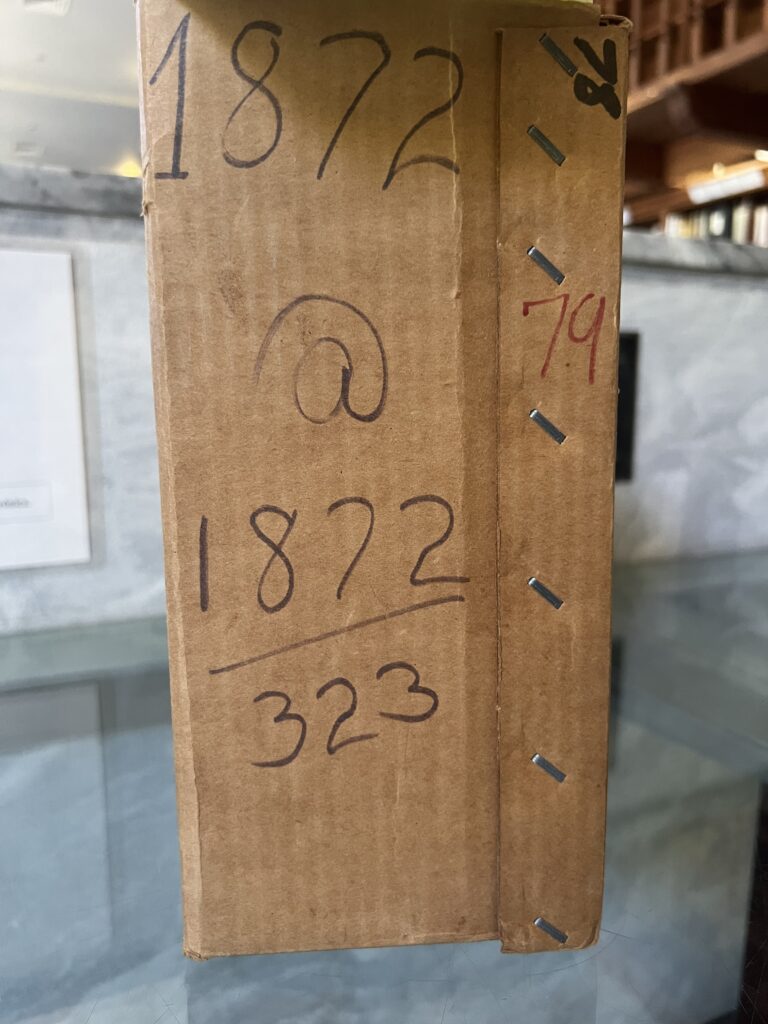
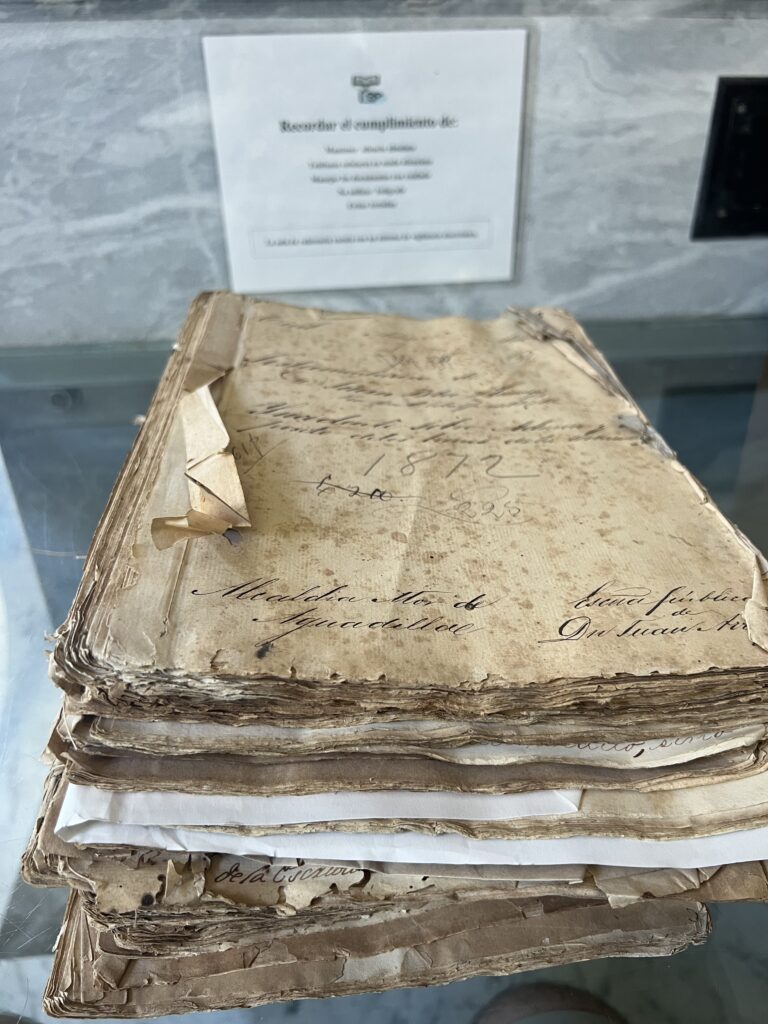
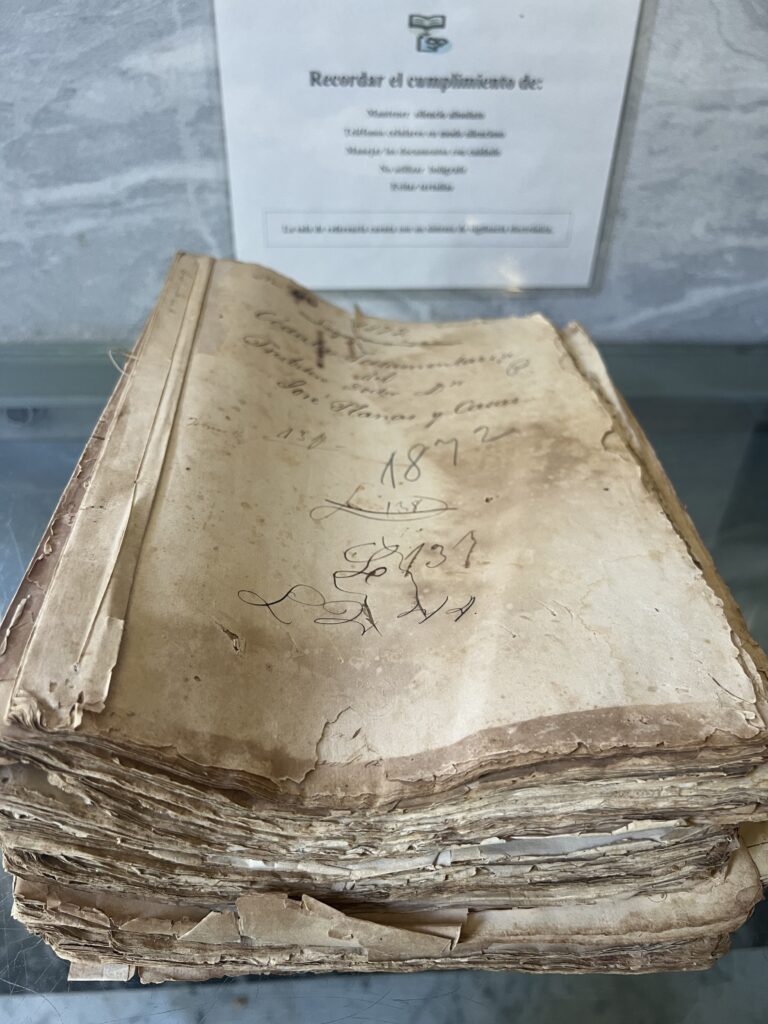
Between these two documentsthere were over one hundred pages associated to Gabriel Magraner. A lot of names were also mentioned, including my 3 great-grandfather’s name (Damián Magraner Morell), in relation to the money, objects, and debts left behind by/to Gabriel. It seems that in the short time Gabriel was there, he was able to establish various economic relationships with other men in Lares and acquire various items. I will have to sit and go through each page meticulously to better understand what possessions Gabriel had and who owed him money or who he owed money to.
Similarly, his last will and testament confirmed that Gabriel did still own some enslaved individuals when he passed in 1872. It would interesting to see what happened to them, especially since slavery was then abolished on the island in 1873.
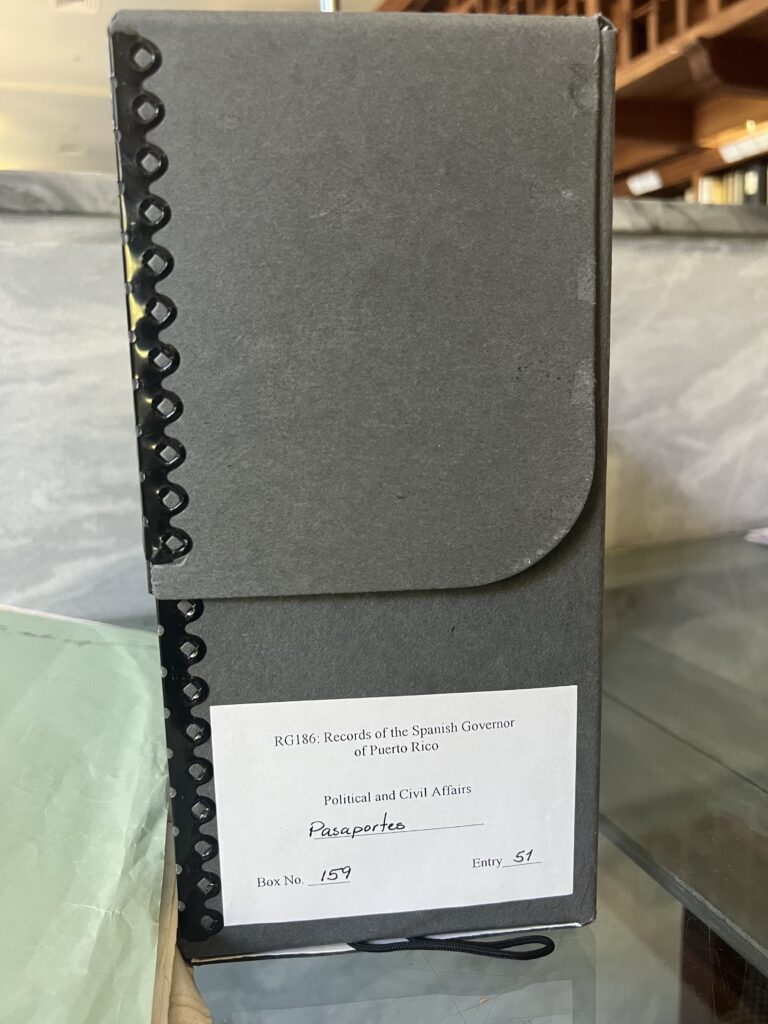
While here I also took a look at the passport records from about the mid-1800s in hopes of finding my ancestors from Martinique and Guadeloupe who traveled to Puerto Rico. Unfortunately, I was not able to find any evidence of them entering or exiting the island. I know that they must have arrived in the 1860s and then returned to Martinique around the late 1870s before ultimately traveling back to Puerto Rico; however, the passport records were not as extensive as I would have liked them to be, which means that I was not able to locate my ancestors. I imagine there are more records related to them somewhere in the archive; however, since many records have not yet been digitized, this would mean going through each box page-by-page to locate them.
What's Next?
My next step is to fully read Gabriel’s last will and testament to understand the origins of the Magraner family on the island. For example, did Gabriel Magraner already own hacienda Margarita when he died in 1872? If not, was what he left behind the origins of this hacienda? Did Gabriel own anything in Sóller, Mallorca before he left to Puerto Rico?
I know that my 3rd great-grandfather stayed on the island (and traveled back to Sóller as well) until the late 1880s. So reading this record will help me to understand what possessions came into the hands of Damián and how this set him up for his time in Puerto Rico.
Even though Gabriel was not my direct ancestor, studying his life and the end of it will be important for understanding my own ancestor’s life. It seems that they both traveled to Puerto Rico to find new opportunities together and so better understanding Gabriel Magraner will help me to understand Damián Magraner as well.
Stay tuned for the more thorough analysis of my research! All this to say – if you can, conduct research in person to find the documents that are not online and that help you to continue learning about your ancestors and your family tree!
My great-grandfather was (S)Ceferino Figueroa and great-grandmother was Victoriana Alicea. My great-grandfather had many children by several women with my great-grandmother being one of the women. My family who are all gone would not admit to much on the situation. I am thinking he may have been a plantation owner with the women being workers? I have not found anything more other than Victoriana Alicea’s father was Casimiro Alicea and mother was Claudina Montalvo. I am stuck. All this occurred in the Sabana Grande/San German area. Do you have any suggestions? Or, are there any lists or documents showing indentured servants? What is my next step? Any help would be grateful.
Hi Nelson, I would recommend you learn more about Ceferino Figueroa. Did he leave behind a will? Do you know more about the property he owned? Was this before or after enslavement ended on the island? You may be able to find information on who worked on his land or other information in notary records in the Archivo General de Puerto Rico if he left behind a will. I would recommend searching their site and looking see what you can find for Sabana Grande and San Germán and see what records would be from that timeframe. Hope that helps!
Hi
I’ve recently done some research on my Paternal side of my family. I think I hit the end of the road with dates/members not registered. I found my great grandfather Miguel Negron showing records dating back to his birth date 1837 my great grand parents Ramon Negron and . It is showing several entries with two baptisms, and it is hard to read the documents. What programs are you using to translate these documents if any? What other sources does Puerto Rico has to offer for family history searches?
Hi Gabriel, personally I read all of the documents myself and have not used any programs to transcribe these documents. I know some people are using AI to help, though given the handwriting, the quality of the document, it can be difficult for AI to fully determine what the document says. With the sources, it really depends on your family. Not sure if your Negrón family is from around SJ, such as Corozal, Toa Alta/Baja, Vega Alta/Baja, etc., but many of these towns do not have their church records online which would require getting access to them to find out more about your ancestors. Toa Alta does, for example, but the other towns don’t. I recommend checking out the Instituto de Cultura Puertorriqueña’s websitr, though a lot of these records are not digitized and available online. I hope this helps!