It made me wonder if this event, or any fall out from it, is what pushed my ancestor from San Juan del Puerto in southern Spain to travel to Puerto Rico. Therefore, I wanted to research this event, its effects, and my ancestor’s life around that time period.
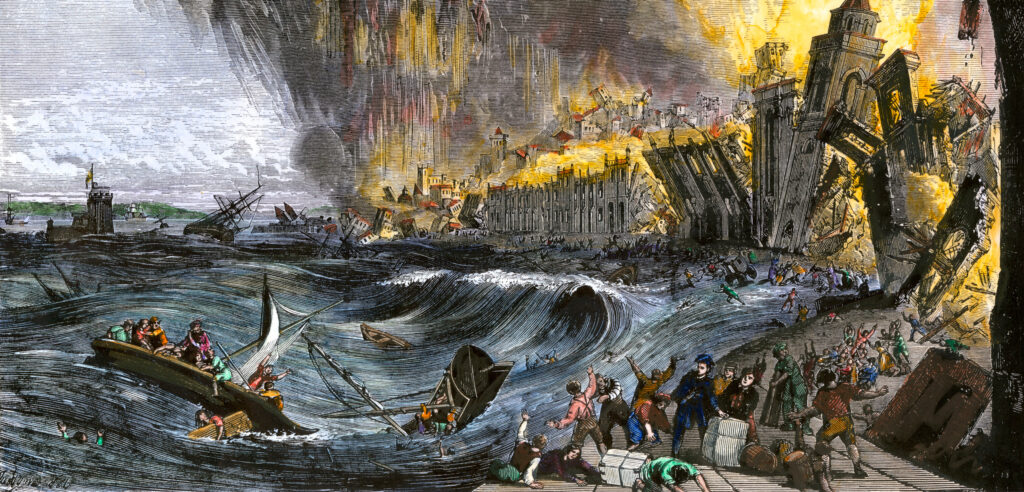
Source: “The Earthquake That Brought Enlightenment,” Hakai Magazine (https://hakaimagazine.com/features/the-earthquake-that-brought-enlightenment/: accessed 11 July 2026).
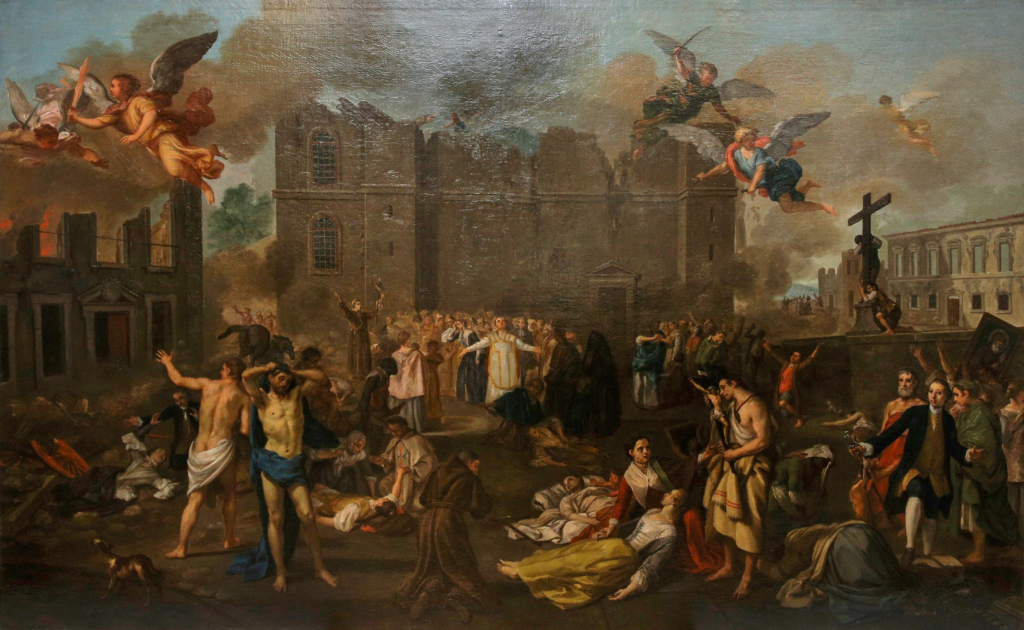
The 1755 Lisbon Earthquake, also known as the Great Lisbon Earthquake, despite its name, affected more than just Portugal. The event occurred on 1 November 1755 — All Saints’ Day. The earthquake, along with subsequent fires and tsunamis, destroyed the city of Lisbon and surrounding areas. Seismologists estimate that the earthquake likely had a magnitude of 7.7 or greater with an epicenter in the Atlantic Ocean. It is known as the third largest scale earthquake to hit the city of Lisbon, with previously known earthquakes having occurred in 1356 and 1531. Interestingly enough, this event led to the birth of modern seismology and earthquake engineering, as it was the first earthquake studied scientifically.[1]
It is said that the earthquake was felt as far away as the Caribbean and even in Finland. Back in the Iberian peninsula, it was estimated that the earthquake caused a death toll of 40,000-50,000. The Southern Spanish city of Cádiz was also hit by tsunamis caused by the earthquake — with waves as high as 65 feet! [2]
San Juan del Puerto
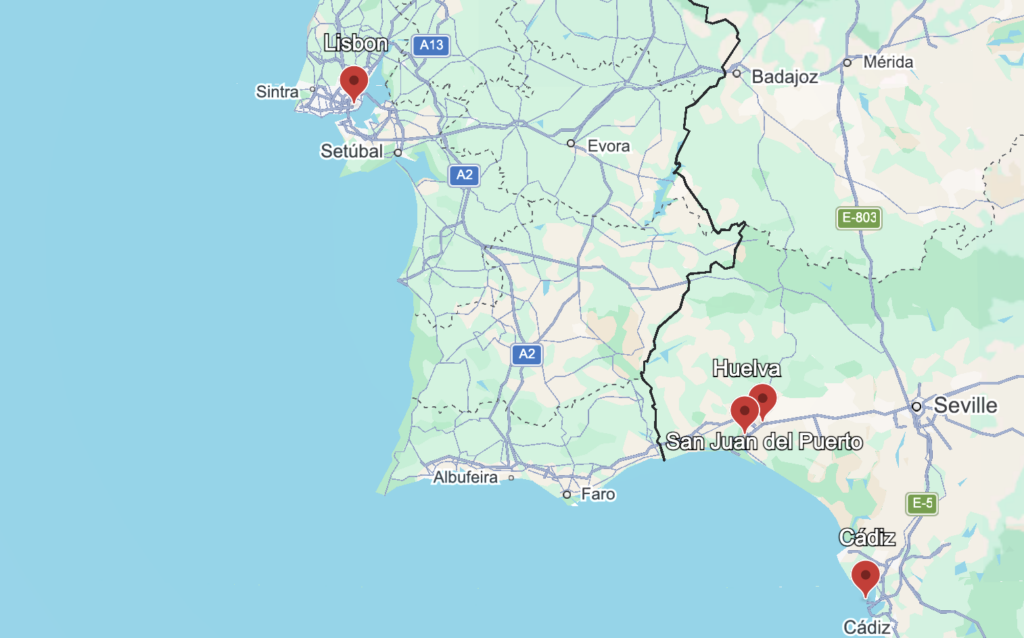
The small town of San Juan del Puerto isn’t too far off from Cádiz and so I imagine effects were felt there too. There are accounts of destruction in Huelva, which is an even closer city than Cádiz. So engrained in the psyche is the earthquake, that a tradition began that year in San Juan del Puerto that is still celebrated today — the festival of San Juan that includes the “encierro” or running with the bulls as a devotion to San Juan Bautista. [3][4]
Lisbon, Portugal and Cadíz, Huelva, and San Juan del Puerto, Spain.
José Manuel Andrés Dávila García
José Manuel Andrés Dávila García was born in 1747 in San Juan del Puerto, Spain. He was the son of Miguel Dávila Ramírez and Juana García Serberos. This means that my 6th great-grandfather would have been eight years old when the 1755 Lisbon Earthquake occurred. Though it likely wasn’t the ultimate force to push him to migrate, it makes me wonder what his life would have been like during and after the event.
Much of José’s life during time is unknown. The next time he appears is on a birth record for his daughter Catalina in 1773 in Coamo, Puerto Rico. Therefore I have many questions about his life in those years between the earthquake and the birth of his daughter. What did his family do for work in the town? Was local business, agriculture, and the economy affected by the earthquake? I would imagine that José likely left shortly after the earthquake, sometime in the 1760s; however, he could have left as late as the 1770s.
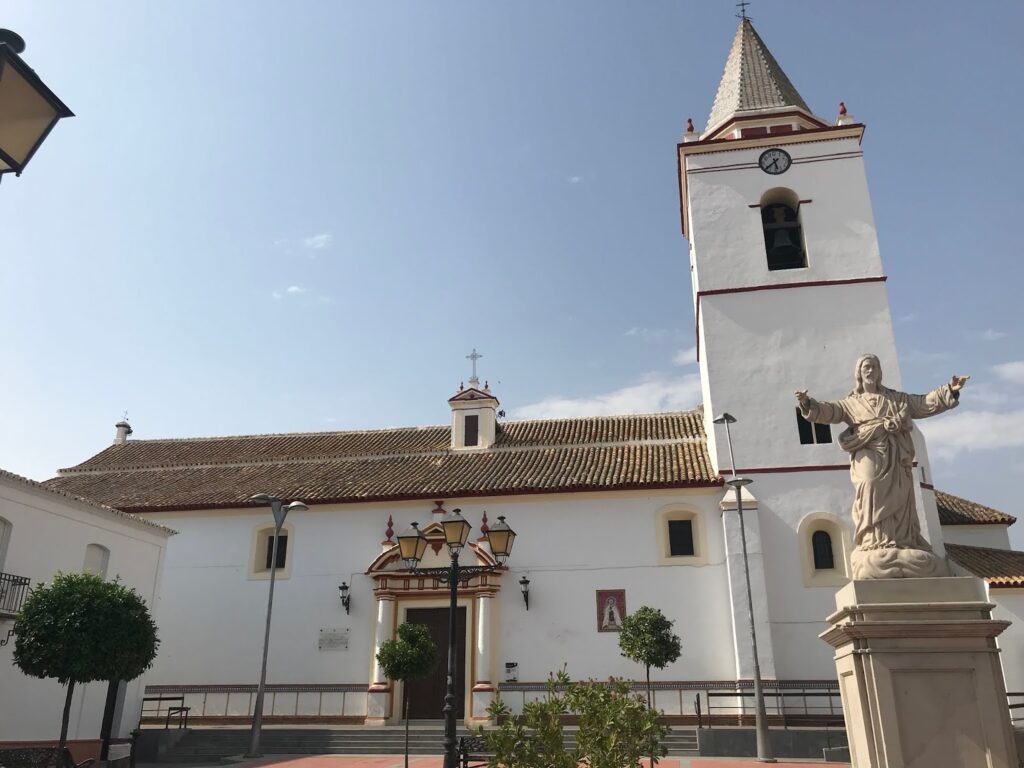
This earlier research in Puerto Rican and Spanish history can be a bit more difficult. Most of the genealogical work in Puerto Rico needs to be done via religious records. The other records available for this time period are typically held in the Archivo General de Puerto Rico and sadly many of the earlier books are fuera de consulta given the state of the books. Similarly in Spain, I don’t know if/what other resources are available to help fill in the gaps. For example, it wasn’t until I was in the church of San Juan del Puerto researching my ancestors that I learned that the Archive in Huelva had records for consanguineous marriages that I could consult. Similarly, the distance between New York City and Southern Spain makes researching there more difficult.
Nonetheless, learning about these events in history can help to give us ideas of the situation of our ancestors’ lives. By studying this earthquake, I can better understand the events surrounding my ancestor’s life in southern Spain in the eighteenth century.
Source: San Juan del Puerto, Spain Church; privately held by Luis Rivera [ADDRESS FOR PRIVATE USE], Bronx, New York; Digital image, created July 2019 by Luis Rivera and currently held by author.
Cover Image Source: “O Terramoto de 1755, pintado entre 1756-1792 por João Glama Ströberle” RickMorais (19 March 2018) – Wikimedia Commons (https://commons.wikimedia.org/wiki/File:O_Terramoto_de_1755_(1756-92)_-_Jo%C3%A3o_Glama_(MNAA).png : accessed 11 July 2026).
Sources
[1] “1755 Lisbon earthquake,” Wikipedia (https://en.wikipedia.org/wiki/1755_Lisbon_earthquake: accessed 11 July 2026).
[2] “Lisbon earthquake of 1755,” Britannica (https://www.britannica.com/science/earthquake-geology/Tectonics: accessed 11 July 2026).
[3] “Así afectó el terremoto de Lisboa de 1755 a El Rocío: ermita destruida y traslado de la Virgen a Almonte,” Huelva Información (https://www.huelvainformacion.es/elrocio/terremoto-lisboa-1755-rocio_0_2002292612.html: accessed 11 July 2026).
[4] “La tradición de los encierros en San Juan del Puerto comienza tras el terremoto de Lisboa en 1755,” Canal Sur (https://www.canalsur.es/television/andalucia-de-fiesta/tradicion-encierros-san-juan-puerto_1_1233496.html: accessed 11 July 2026).